The U.S. exhibition industry is showing signs of resilience despite economic uncertainty, geopolitical tensions and changing business conditions. The latest findings from UFI’s Global Exhibition Barometer indicate that many trade show organizers continue to anticipate stable or improving performance, while also adapting to new technologies and evolving market priorities.
The 37th edition of UFI’s Global Exhibition Barometer was completed in June 2026 and surveyed 466 companies across 59 countries and regions. The findings provide insight into revenue expectations, sponsorship, profitability, economic concerns, geopolitical developments and the growing adoption of artificial intelligence.
While the U.S. sample consisted of only 18 companies and should therefore be viewed as directional rather than fully representative, the results offer useful indicators of where the American exhibition sector may be heading.
1. U.S. Exhibition Organizers Maintain a Positive Outlook
Revenue expectations remain relatively encouraging among U.S. exhibition companies. Around 90% of surveyed companies expect at least some increase in revenue, while 13% anticipate growth of more than 5%. Only 7% expect a significant decline.
Globally, 27% of surveyed companies expect annual revenue growth of more than 5%, while 38% anticipate stable revenue. In the U.S., 73% expect revenue to remain stable, suggesting that organizers are entering the next phase of the market with a cautious but generally positive outlook.
The results indicate that the exhibition industry may be capable of maintaining momentum even without significant expansion in physical event space.
2. Sponsorship Continues to Drive Growth
Sponsorship has emerged as one of the strongest growth areas for exhibition organizers. Nearly 80% of companies surveyed reported at least modest gains in sponsorship sales, with 23% experiencing growth of 5% or more.
By comparison, 20% of respondents identified the sale of services as a source of 5% or greater growth.
The findings highlight the continued importance of sponsorship as organizers look for ways to increase event revenue without relying exclusively on exhibitor space sales or attendance growth.
3. Profitability Remains Stable
Operating profits appear steady, although organizers are not seeing the exceptional growth recorded in previous years.
A year earlier, 25% of companies reported operating profit growth of at least 10%. In the latest survey, none of the respondents reported growth at that level.
However, the outlook remains relatively stable. Approximately 80% of respondents expect operating profits to remain steady, while only 7% anticipate a major loss. That compares with 13% who expected a major loss in 2025.
For exhibition businesses, maintaining profitability during a period of economic uncertainty may be just as important as pursuing rapid growth.
4. The U.S. Economy Is the Biggest Short-Term Concern
American exhibition companies appear more focused on domestic economic conditions than some of their international counterparts.
The U.S. economy was identified as the most important short-term business concern by 24% of respondents. Geopolitical challenges followed at 22%, while global economic developments accounted for 20%.
U.S. companies also expressed somewhat greater concern in these areas than international respondents. This suggests that domestic economic conditions could have a significant influence on event budgets, exhibitor participation and attendee spending in the months ahead.
5. Global Economic Conditions Remain a Long-Term Issue
Looking further ahead, global economic trends were identified as the leading concern for the next three to five years among both U.S. and global respondents, at 18%.
In the United States, sustainability and the domestic economy each accounted for 13%, while geopolitical challenges, industry competition and event digitalization each represented 11%.
These findings suggest that exhibition organizers are thinking beyond immediate revenue performance and increasingly considering longer-term changes that could influence how events are planned, delivered and monetized.
6. Middle East Disruptions Have Limited Impact Outside the Region
Despite concerns surrounding higher energy prices and geopolitical instability in the Middle East, the latest UFI findings suggest that the impact on exhibitions outside the Gulf Cooperation Council region remains limited.
Around 90% of companies outside the GCC reported either no negative impact or only a moderate impact from the disruption.
For U.S. organizers, this indicates that international exhibitions have so far avoided a major downturn caused by the regional instability, although organizers are likely to continue monitoring travel, transportation and economic conditions.
7. AI Adoption Is Growing, but U.S. Organizers Are Still Catching Up
Artificial intelligence is becoming increasingly common across the global exhibition industry. The latest UFI data shows that 91% of surveyed companies now use AI-powered tools, representing a 4% increase from six months earlier.
However, many organizations remain in the research and testing stages. Globally, 67% of respondents are exploring AI for company and process efficiency, 71% are researching its use for improving customer experience, and 55% are considering AI-powered products as a way to generate revenue.
The U.S. market appears to be moving more cautiously. None of the surveyed U.S. companies reported implementing proprietary algorithms trained with their own data. Meanwhile, 38% said they use AI-powered tools integrated into existing platforms.
Among U.S. companies already using AI, 31% said the technology is improving business processes and efficiency, while another 44% remain in the testing phase.
This suggests that AI adoption in the U.S. exhibition sector is progressing, but there remains substantial room for organizers to move from experimentation toward broader implementation.
What These Trends Mean for the U.S. Exhibition Industry
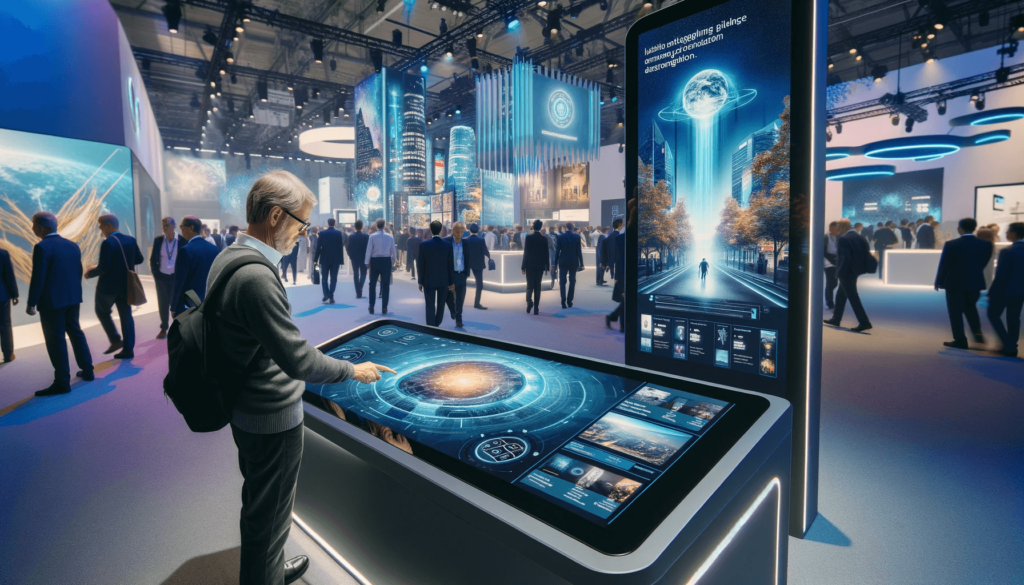
Taken together, the findings present a picture of an exhibition industry that is cautiously optimistic but increasingly focused on efficiency, diversification and technological innovation.
Revenue expectations remain positive, sponsorship continues to provide growth opportunities and operating profits are largely expected to remain stable. At the same time, organizers are watching domestic economic conditions and global developments closely.
Artificial intelligence is likely to become an increasingly important part of this transformation. As more event technology platforms integrate AI capabilities, organizers may use these tools to improve operations, personalize attendee experiences, analyze event data and develop new revenue opportunities.
The industry may therefore experience growth through better performance and technology adoption rather than simply through larger physical footprints.
What to Watch in the Coming Months
Several external factors could influence the industry’s trajectory. The U.S. economy remains a key consideration, while the November 2026 midterm elections could affect business sentiment and travel decisions.
The 2026 FIFA World Cup may also create opportunities for international business and travel in the United States, potentially benefiting events and destinations connected to tournament activity.
For organizers, continued monitoring of economic conditions, sponsorship performance, international participation and AI adoption will be important as the industry moves toward 2027.
Conclusion
The latest UFI data suggests that the U.S. exhibition industry is entering the second half of 2026 with a cautiously positive outlook. Most surveyed companies expect stable or improving revenue, while sponsorship remains a significant source of growth and operating profits are largely expected to hold steady.
At the same time, economic uncertainty, geopolitical developments and technological change continue to shape strategic decisions. AI adoption stands out as one of the biggest opportunities, although many U.S. organizers are still experimenting with existing tools rather than developing proprietary systems.
Overall, the exhibition sector appears positioned for measured growth. The organizations most prepared to adapt to economic shifts, strengthen sponsorship strategies and integrate emerging technologies may be best positioned to capitalize on the industry’s next phase.
FAQs
Key trends include stable revenue expectations, growing sponsorship sales, steady operating profits, concern over the U.S. economy, limited impact from Middle East disruptions and increasing adoption of AI-powered tools.
UFI’s latest Global Exhibition Barometer reports that 91% of surveyed companies worldwide are using AI. However, many remain in the research or testing stages, particularly when it comes to using AI for revenue generation and advanced business applications.
The outlook is generally positive. Around 90% of surveyed U.S. companies expect at least a minimal increase in revenue, while 73% anticipate stable revenue. However, the U.S. sample was limited to 18 companies, so the results should be viewed as directional rather than fully representative.