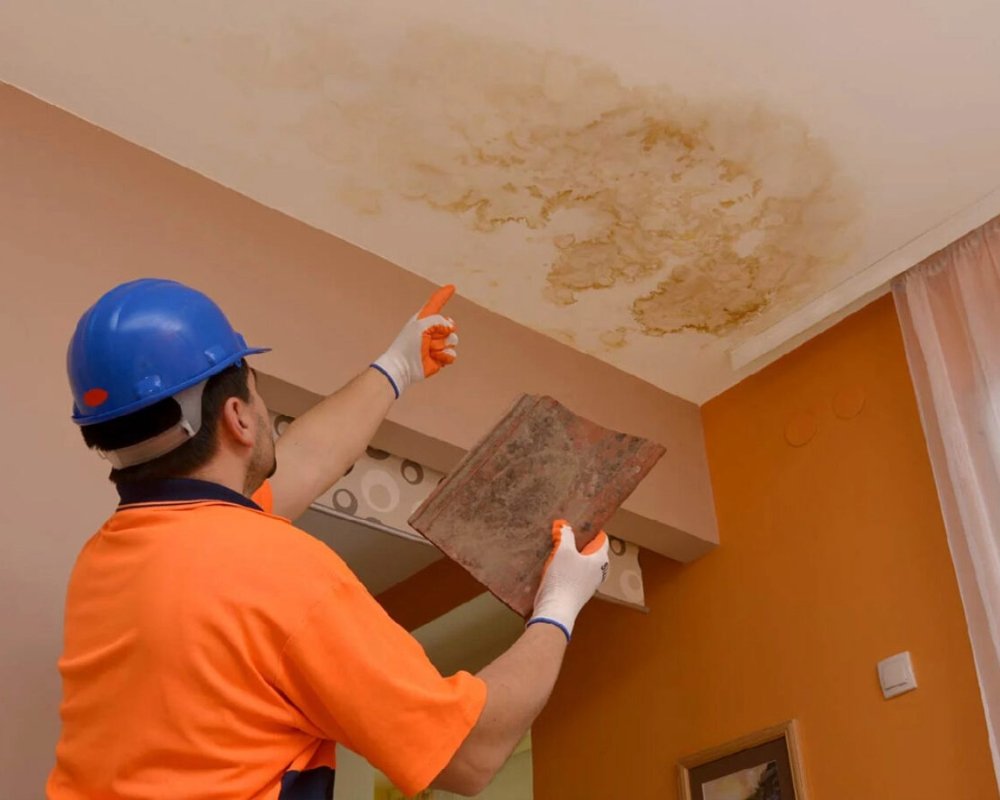
A water stain on the ceiling or upper wall can immediately make homeowners suspect a damaged roof. However, not every sign of moisture means that roofing repairs are needed. Water can travel through walls, ceilings, insulation, and framing, making it difficult to identify its actual source.
Before assuming that a roof replacement or major repair is necessary, it is worth investigating several other common causes. Plumbing problems, attic condensation, HVAC drainage issues, and faulty window flashing can all create damage that closely resembles a roof leak.
1. Upper-Floor Plumbing Leaks
Plumbing located on an upper floor is one of the first places to investigate when water appears on a ceiling. Bathrooms, kitchens, and laundry areas can all contain pipes, drains, and fixtures that may develop leaks.
Worn connections, damaged seals, cracked drain lines, or leaking fixtures can allow water to enter the ceiling below. The location of the visible stain does not necessarily indicate where the leak began because water can travel along framing and other building materials before becoming noticeable.
A useful way to investigate the problem is to operate plumbing fixtures one at a time and monitor the affected area. Depending on the source, the repair may involve replacing a seal or connection, repairing a pipe, or addressing another plumbing component. A licensed plumber can also help identify hidden leaks through appropriate testing and inspection.
2. Attic Condensation
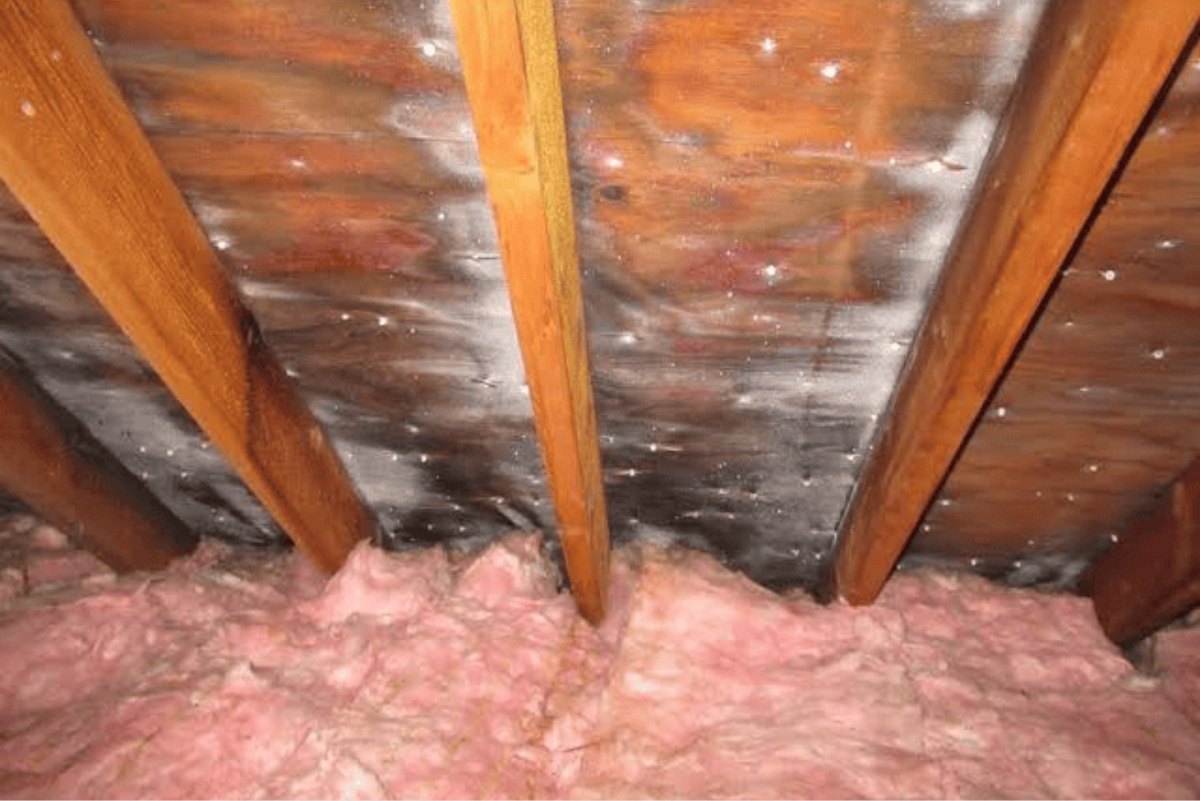
Moisture inside an attic can sometimes create symptoms that look remarkably similar to rain entering through the roof. During colder weather, warm and humid air from the living space can rise into the attic. If ventilation is inadequate, that moisture may condense against the underside of the roof sheathing.
The resulting water can drip onto insulation and eventually reach the ceiling below. Because the damage may appear after homeowners notice moisture around the ceiling, it is easy to mistake condensation for a roofing failure.
Improving attic ventilation and sealing air leaks from the living space can help address the problem. Homeowners should also check that soffit and ridge vents are functioning properly. Bathroom exhaust fans should discharge outdoors rather than into the attic.
In some homes, improperly installed spray foam insulation can also interfere with ventilation. Damp insulation, widespread moisture, and a lack of connection between the problem and rainfall can point toward condensation rather than a roof leak.
3. HVAC Condensation Issues
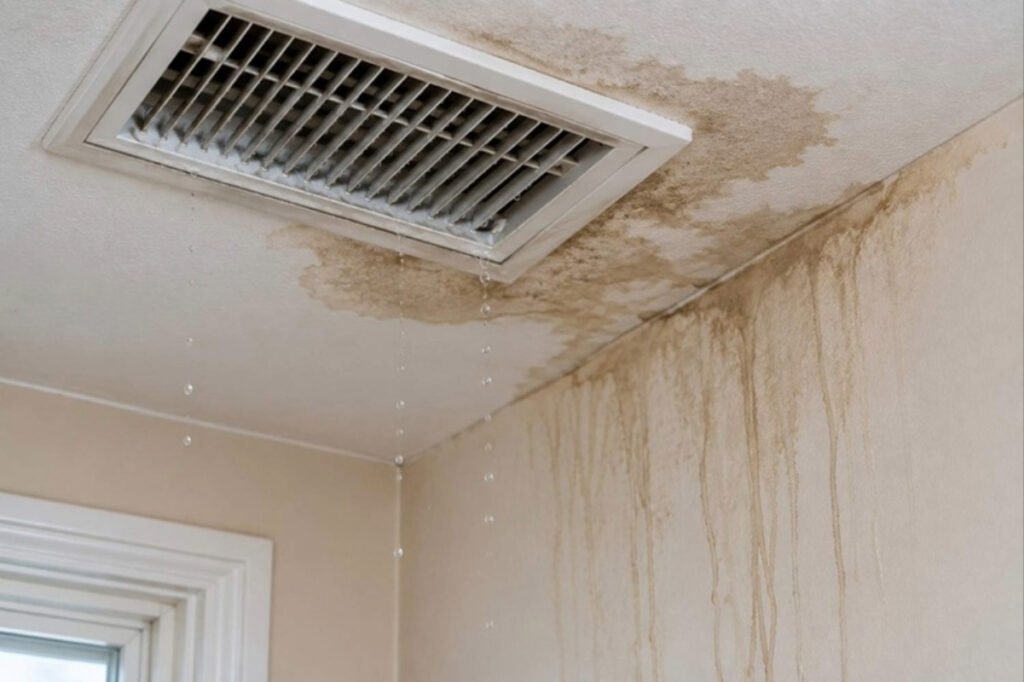
Air conditioning systems naturally produce condensation as they remove moisture from indoor air. That water should normally drain away through a condensate line. If the line becomes clogged or another component fails, however, water can overflow and find its way into ceilings or walls.
HVAC-related moisture problems can be especially noticeable in warm climates where air conditioning systems operate frequently.
Potential causes include clogged condensate drain lines, damaged drain pans, or poorly insulated ductwork. Routine HVAC maintenance, including cleaning or flushing the condensate drain, can help prevent some of these problems. Proper duct insulation can also reduce unwanted condensation.
If a ceiling stain appears near an air-conditioning system or ductwork, investigating the HVAC system before assuming the roof is responsible can save time and unnecessary repair costs.
4. Failed Window Flashing
Windows on upper floors can also be responsible for water damage that appears to come from the roof. Window flashing is designed to direct water away from vulnerable areas around the window opening. Over time, however, flashing or surrounding seals can deteriorate.
When flashing is damaged or improperly installed, wind-driven rain can get behind siding and travel through the wall. Eventually, the moisture may appear near the ceiling or at the top of an interior wall, creating the appearance of a roof leak.
This type of problem may occur only during heavy rain when wind pushes water against a particular side of the house. A controlled hose test can help identify the source. Starting near the lower portion of the window and gradually moving upward can help reveal where water begins entering.
If faulty flashing is confirmed, repairs may involve replacing or correcting the flashing and properly sealing the surrounding weather barrier.
How to Tell Where the Water Is Coming From
Finding the source of a water stain is often more complicated than simply looking directly above it. Knowing how to find a roof leak before it causes damage can help homeowners investigate potential sources more effectively. Water can move horizontally or vertically through framing, insulation, drywall, and other materials.
Pay attention to when the moisture appears. A problem that occurs only after heavy rain may point toward exterior water intrusion, while moisture that appears regardless of weather could indicate plumbing, HVAC, or condensation issues.
The location of nearby bathrooms, kitchens, laundry areas, air-conditioning equipment, and windows can also provide useful clues. If the source remains unclear, a qualified professional can inspect the affected areas and perform appropriate testing rather than relying only on the location of the visible stain.
Conclusion
A ceiling stain or dripping water should always be investigated, but it does not automatically mean the roof has failed. Upper-floor plumbing, attic condensation, HVAC drainage problems, and damaged window flashing can all produce similar symptoms.
Identifying the actual source before beginning major repairs can prevent unnecessary roofing work and help ensure the underlying problem is properly resolved. When the source cannot be safely or confidently identified, getting help from an appropriate qualified professional is the best approach.
FAQs
No. A water stain can result from plumbing leaks, attic condensation, HVAC condensation, window flashing failures, or other sources. The timing and location of the moisture can help narrow down the cause.
Water can travel through framing and other building materials before becoming visible. As a result, the stain or dripping water may appear some distance from the actual plumbing leak.
Avoid assuming that the roof needs major repairs based only on the location of the stain. If the source is difficult to identify, a qualified plumber, HVAC professional, window specialist, or roofing professional can inspect the relevant area and perform appropriate testing.